Direct power purchase agreement

DPPA advisory for businesses and power generators

Feasibility assessment, legal documentation, electricity pricing models and buyer–seller matching under the direct power purchase agreement (DPPA) mechanism.

  • 01. Pre-feasibility assessment
  • 02. Contract & pricing structure
  • 03. Legal documentation & registration
  • 04. Negotiation & operations
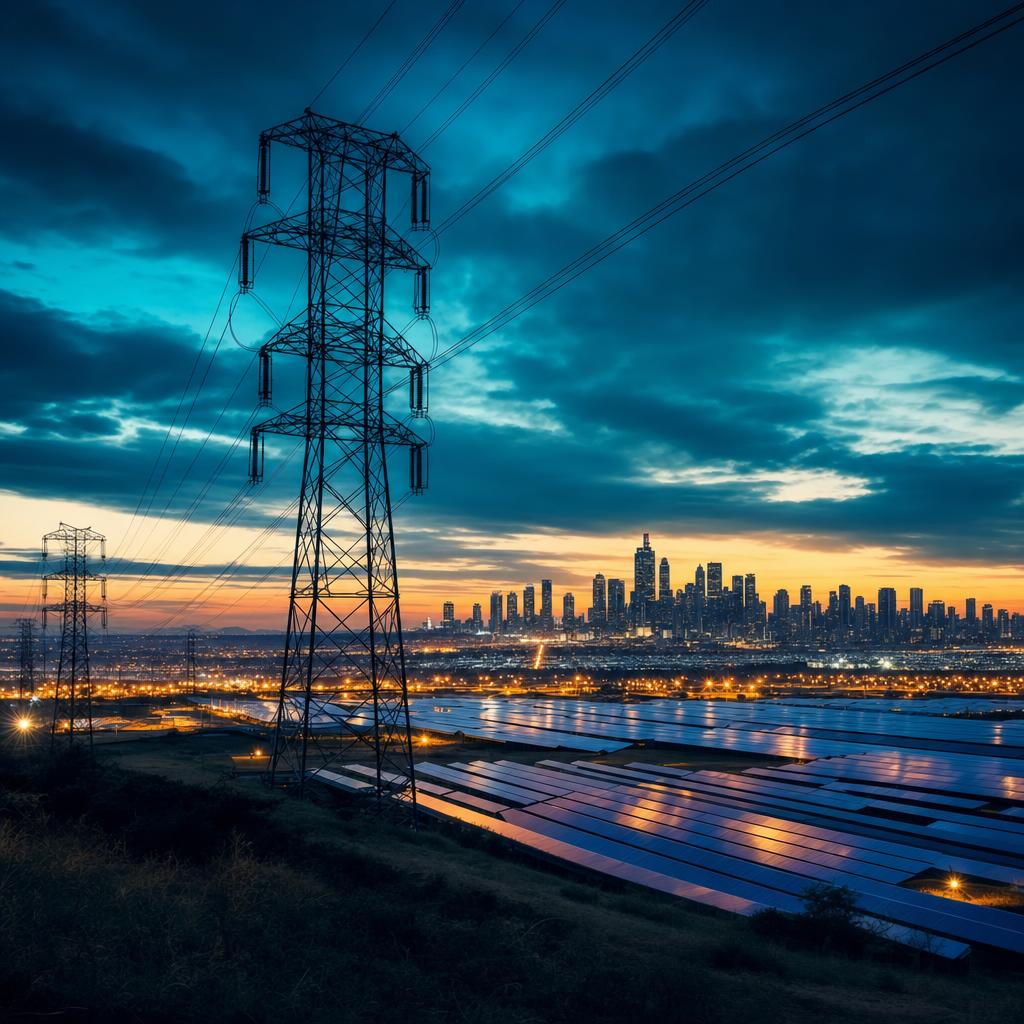
Transmission lines and a solar power plant

Benefits

Why are businesses interested in DPPA?

Buy renewable power directly

Businesses sign a power purchase agreement directly with a solar or wind plant instead of buying only from the grid.

Predictable energy costs

Long-term contracted prices help control energy costs over many years.

ESG reporting & energy certificates

Demonstrate renewable energy share for ESG and CBAM reporting and international customer requirements.

No dependency on roof area

Generation sits at another site, which suits businesses without enough roof space for solar.

Two DPPA models

Private wire or through the national grid?

Model 1

DPPA via a private connection line

The renewable generator and the consumer are connected by a dedicated line that bypasses the national power system.

View details
Eligible parties
No capacity threshold for the generator; the consumer does not have to qualify as a large electricity consumer
Contracts
A direct power purchase agreement between the two parties under civil law and electricity regulations
Price
Freely negotiated between the parties — fixed or indexed to an agreed formula
Additional costs
Investment and operation of the line, substation and dedicated metering
Best for
Generation located next to the factory or industrial park with available land and a line corridor

Model 2

DPPA through the national grid

Power is delivered through the national grid: the generator sells into the electricity market, the consumer buys from the power corporation, and both settle the difference under a forward contract.

View details
Eligible parties
Wind, solar or biomass plants of 10 MW or more participating in the competitive wholesale electricity market; large consumers connected at 22 kV or above
Contracts
An electricity forward contract between generator and consumer, plus a power purchase agreement with the power corporation
Price
Contract price and committed volume agreed by the parties, referencing the spot electricity market price
Additional costs
Power system service costs: transmission, distribution–retail, system dispatch, market operation and industry administration
Best for
Businesses that want renewable power from a project in another province, independent of their own site

Eligibility

Who can join DPPA through the national grid?

For the grid-connected model, Decree 57/2025/ND-CP sets conditions for both the generator and the buyer.

Renewable energy generator
  • Wind, solar or biomass generation
  • Capacity of 10 MW or more, connected to the national power system
  • Direct participation in the competitive wholesale electricity market
  • Compliance with metering, SCADA and system dispatch requirements
Large electricity consumer
  • Buying electricity for production or for EV charging services
  • Connected at a voltage level of 22 kV or above
  • Average consumption at the large-consumer threshold of the wholesale market rules (typically from 200,000 kWh per month)
  • Retailers in industrial parks and clusters may be authorised by the consumer to participate
How is DPPA regulated in Vietnam?
Regulation in force
Decree 57/2025/ND-CP dated 3 March 2025
Replaces
Decree 80/2024/ND-CP
Two models
Private connection line and via the national grid
Eligible generation
Wind, solar and biomass
What does a business actually pay under a grid-connected DPPA?

Electricity purchased from the power corporation

The consumer still buys its full consumption from the utility at the market price plus the regulated components.

Forward contract settlement

The difference between the contract price agreed with the generator and the spot market price for the committed volume.

Power system service cost

Transmission, distribution–retail, system dispatch, market operation and industry administration, charged per kWh.

Compliance and operating cost

Metering, volume reconciliation, periodic reporting and the team or advisor managing the contract over its term.

Documents to prepare

Consumer side

  1. 1.Business registration certificate and production activities
  2. 2.Current power purchase agreement with the utility
  3. 3.Invoices and consumption data for the last 12 months
  4. 4.Metering point details, connection voltage level and single-line diagram
  5. 5.Planned consumption volumes and renewable energy targets

Generator side

  1. 1.Investment approval decision and electricity operation licence
  2. 2.Plant technical parameters, capacity and connection point
  3. 3.Competitive wholesale electricity market participation dossier
  4. 4.Actual or forecast hourly generation data
  5. 5.Metering, SCADA documentation and connection agreement
Key risks and how to control them

Volatile spot electricity market price

Mitigation: Structure contract price and committed volume in bands, with a difference-sharing mechanism and periodic review clauses.

Generation falls short of the committed volume

Mitigation: Review irradiation/wind data and maintenance schedules, and include explicit volume commitments and remedies in the contract.

Changes in regulations and system service costs

Mitigation: Change-in-law clauses and an annual recalculation of system service costs in the financial model.

Metering and settlement discrepancies

Mitigation: Standardised metering procedures, three-party reconciliation and volume reporting per trading cycle.

Regulations and guiding documents may be amended; for every project we re-check the version in force at the time the application is prepared.

Roadmap

Steps to put a DPPA in place

  1. 011 – 2 weeks

    Data collection & eligibility screening

    Twelve months of electricity bills, connection voltage level, load profile and renewable energy targets.

  2. 022 – 4 weeks

    Pre-feasibility report & financial model

    Before/after cost comparison, sensitivity analysis on market price and committed volume.

  3. 031 – 3 months

    Generator matching & forward contract negotiation

    Shortlisting suitable projects and negotiating contract price, committed volume, term and risk allocation.

  4. 041 – 3 months

    Application & utility coordination

    Preparing the participation dossier, signing the power purchase agreement with the power corporation and finalising metering.

  5. 05Throughout the contract

    Operation, reconciliation & reporting

    Tracking volumes, reconciling settlement differences and reporting the renewable share for ESG purposes.

Service packages

Pick the advisory scope that fits your stage

Package 1 – Pre-feasibility

Establish whether your business is eligible and what savings to expect.

View details
  • Eligibility screening against the regulations in force
  • Load profile and current tariff analysis
  • Before/after DPPA cost comparison
  • Pre-feasibility report with recommended next steps

2 – 4 weeks

Package 2 – Contract & application

Negotiate the forward contract and complete the participation dossier.

View details
  • Matching and screening suitable generators
  • Financial model, price structure and risk allocation
  • Review and negotiation of the electricity forward contract
  • Dossier preparation and coordination with the utility

1 – 3 months

Package 3 – Operation & compliance

Contract management, settlement reconciliation and reporting throughout the term.

View details
  • Volume and settlement difference reconciliation
  • Monitoring regulatory changes and system service costs
  • Renewable share reporting for ESG and CBAM
  • Annual optimisation of the committed volume

Per contract

Expert team

The people who will advise on your DPPA

Dr. Nguyen Hoang Anh

Dr. Nguyen Hoang Anh

Advisor, New Energy Sources & Power Systems

Expertise

PhD in Electrical Engineering, lecturer at Hanoi University of Science and Technology.

Power system planning, transmission grid optimisation and development of new energy sources (hydrogen, renewables).

Le Quang Thong

Le Quang Thong

Director of Engineering & Project Delivery

Expertise

Over 20 years in the power, thermal and industrial energy sectors.

Turnkey delivery of solar, biomass, boiler and DPPA-linked solutions, plus automation to optimise plant performance.

Nguyen Xuan Nghia

Nguyen Xuan Nghia

Director of Investment Strategy & Digital Transformation

Expertise

Over 15 years managing Japan–Vietnam project capital and large-scale operations.

Capital structuring with international CO₂ and carbon-credit funds (Japan, Singapore); digital transformation and AI applications for plant energy optimisation.

Cao The Phong

Cao The Phong

Director of Storage Solutions & Quality Control

Expertise

15 years in automation and new energy.

Battery energy storage (BESS) design and installation advisory, smart charging infrastructure and QA/QC for large-scale projects.

FAQ

What businesses usually ask about DPPA

What is DPPA?

DPPA (Direct Power Purchase Agreement) is a mechanism that allows large electricity consumers to buy power directly from a renewable energy generator instead of buying only from the utility.

Which businesses are suitable?

Typically factories and industrial parks with high electricity consumption that need to demonstrate their renewable energy share. Specific eligibility must be checked against the regulations in force at the time of implementation.

How long does implementation take?

It depends on project size, the DPPA model and progress with the utility. We provide a detailed roadmap after the pre-feasibility assessment.

How are advisory fees calculated?

Based on scope of work: pre-feasibility assessment, contract structuring, legal documentation, or a full lifecycle package.

Do we have to terminate our contract with the utility?

No. Under the grid-connected model the business continues to buy electricity from the power corporation; the arrangement with the renewable generator is settled through an electricity forward contract.

How is DPPA different from a rooftop solar ESCO model?

A rooftop ESCO system sits on your own site and is limited by available roof area. DPPA lets you buy renewable power from a project elsewhere at a far larger scale, and the two options can run in parallel.

Start with a DPPA pre-feasibility assessment

Send us your last three electricity bills and your renewable energy target, and our team will respond with a preliminary plan within 48 working hours.

0867 831 368solar@orcaenergy.vn